
The most common type — hairline cracks running along drywall seams — are almost always benign. Drywall joints are finished with tape and compound, and that compound shrinks slightly as it cures, expands and contracts with humidity and temperature changes, and eventually shows the seam beneath. In new construction this is especially common in the first two to three years as the house dries out and the framing lumber loses moisture content. These cracks are typically very thin, follow a straight line that corresponds to a joist or seam location, and don't change much over time. They're a cosmetic issue, full stop.
Why Is My Ceiling Cracking and When Should I Be Worried?
Most ceiling cracks are cosmetic. That's the reassuring truth that gets lost when you notice a new line spreading across your ceiling and your mind immediately goes to structural failure and foundation problems. The vast majority of cracks you'll find in a typical home are the result of normal settling, seasonal movement, and drywall joint behavior — annoying to look at, easy to fix, and not a sign of anything serious. But some cracks do warrant attention, and knowing the difference matters.
Why Is My Ceiling Cracking? Here's How to Tell What's Normal and What Isn't
Get a Free Quote
Contact Us
Our Services

Satisfied Clients


How Ceiling Pros Atlanta Can Help
Spider web or map cracking — a network of fine cracks radiating from a central point — usually indicates a problem with the plaster or compound itself rather than anything structural. This pattern is common in older homes with plaster ceilings where the finish coat has lost its bond to the base coat over time, or in areas where too much joint compound was applied too quickly and dried unevenly. It looks alarming because of the pattern, but in most cases it's a surface issue that a patient repair job handles effectively.
When people ask why is my ceiling cracking, the situations that actually warrant concern share a few characteristics. Width is one indicator — a crack that's wider than about 1/8 inch, especially if it's wider at one end than the other, suggests more significant movement than routine settling. Cracks that run diagonally, particularly at 45-degree angles from the corners of doors or windows up to the ceiling, can indicate foundation movement or structural stress. Cracks accompanied by other symptoms — doors or windows that have started sticking, floors that feel uneven, walls with corresponding cracks — start to form a pattern that deserves professional evaluation. A single diagonal crack in isolation is less alarming than diagonal cracks appearing throughout a home at the same time.
The most serious category is a crack accompanied by sagging or bowing. If any portion of your ceiling appears to be deflecting downward — even slightly — that's not a cosmetic issue. It could indicate a failing joist, water damage that has compromised the structural assembly, or in older plaster ceilings, the plaster losing its mechanical bond to the lath above. A sagging ceiling is a situation to have evaluated promptly, not patched and ignored.
Water is the thing that changes the entire calculation. A crack that has any brown or yellow staining, is accompanied by soft or bubbling drywall, or appears in a location directly below a bathroom, kitchen, or roof surface needs to be treated as a water intrusion problem first and a crack second. The crack is a symptom; the water is the problem, and it will keep causing damage until the source is identified and fixed. Patching over a water-stained crack without addressing the source is a temporary solution that typically lasts until the next rain or plumbing event.
Age and house type give useful context when you're trying to answer why is my ceiling cracking. Plaster ceilings in older homes develop more character cracks over time as the assembly ages, and minor cracking in plaster is so common as to be nearly universal in homes over 50 years old. Newer drywall construction cracks most actively in the first few years and then tends to stabilize. A house that has been through significant weather events, had major plumbing work done, or sits in an area with expansive clay soils will show more cracking activity than one in a stable environment.
The practical approach when you notice a new crack: photograph it, mark the ends with a pencil and date it, and watch it for four to six weeks. A crack that doesn't grow is almost certainly cosmetic. A crack that extends, widens, or is joined by new cracks in the same period is telling you something is actively changing, and that warrants a closer look from a structural engineer or experienced contractor — not a drywall finisher. Most of the time you'll find that your ceiling's crack history is nothing more than a house doing what houses do over time, which is move a little, settle a little, and show the evidence.
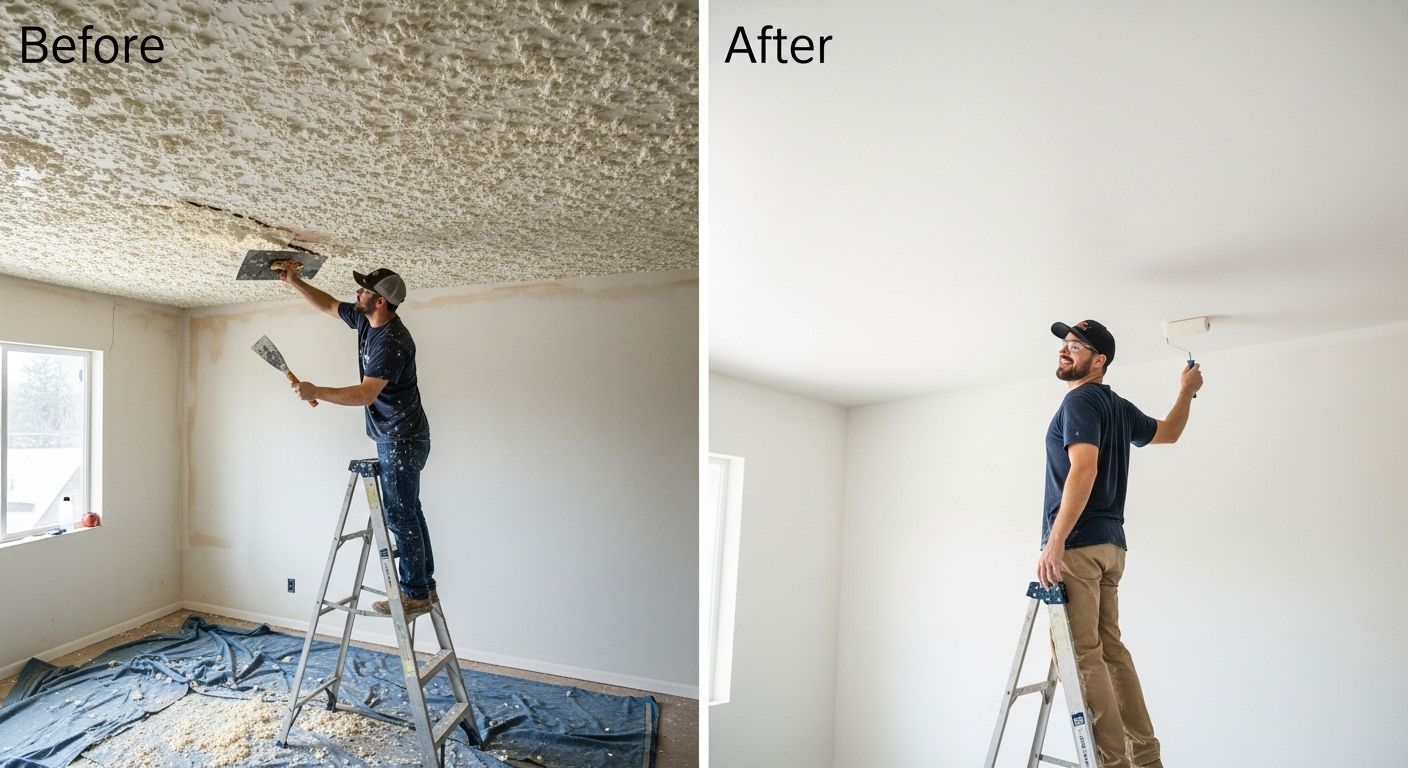
Popcorn Ceiling Removal Near Me? Atlanta Ceiling Pros Serves More Than Just Atlanta
Get a Free Estimate Today
If you’re asking who to call to fix drywall, need drywall repair Atlanta services, or want expert popcorn ceiling removal in Atlanta, our team is ready to help. Contact us today for professional drywall solutions built to last.